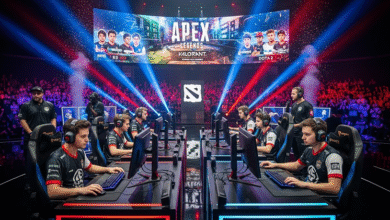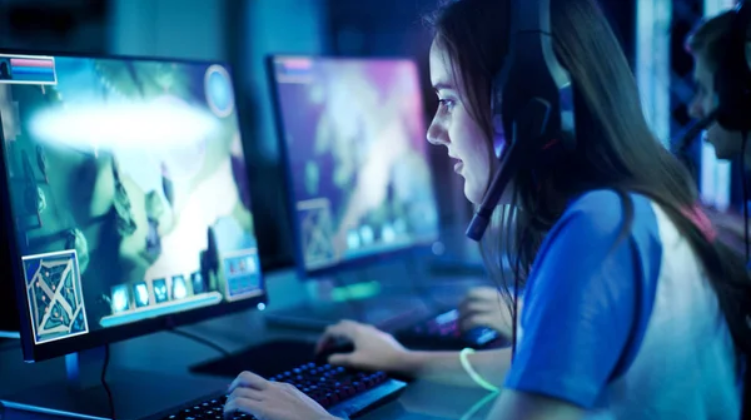
You join a match while dinner cools beside you, expecting a quick distraction. Within moments, a stranger marks a route, another player covers the doorway, and an opponent tests the team’s patience. You are suddenly reading signals at speed. The screen looks busy, but the social logic feels familiar: someone challenges your choices, someone backs them up, and your next move changes the room.
Competition gives you a reason to care
Competition works best when the rules feel visible and the result still seems open. You do not need a grand tournament setting. But close rounds with a clear objective can pull your attention forward better than a distant reward.
A score can sharpen your decisions
You watch the scoreboard because it turns scattered actions into a readable story. A missed pass or risky shortcut suddenly carries weight. Ranked matchmaking adds another layer — opponents sit near your rough skill range, so success feels connected to choices rather than confusion.
If every match feels effortless, you stop examining your habits. If every opponent seems impossible, the contest becomes noise. Good design leaves room for a comeback.
Fairness is felt before it is explained
You notice fairness through timing, visibility, and response. A clear hit marker explains what happened. A replay can expose a mistake without turning it into a courtroom drama. A pause before a rematch lets you judge the result.
Honestly, polished competition should not make you feel tricked. Strong rivals satisfy because you can recognise when your plan stopped working, even if the answer arrives later.
Cooperation makes the screen feel inhabited
Shared objectives change your attention. You scan for what another player needs, not only what improves your position. That shift happens quietly when voice chat is optional.
Small signals do a surprising amount
You can communicate with a marker, a ping, or a character facing a doorway. These tiny signals create practical trust. A teammate highlights a route without demanding a speech, while your response confirms that the message landed.
Good interfaces make teamwork readable through details such as:
- a ping that shows urgency without blocking your view;
- a shared objective that reveals progress quietly;
- a revive action that lets you help without losing every option.
The best cooperative tools disappear into the moment.
Different strengths create better plans
You may be quick with movement but poor at navigation. Another player might notice patterns. Roles become interesting when those differences matter without trapping anyone permanently.
A support role should still give you decisions. Otherwise, helping feels like unpaid maintenance. To be fair, a little friction can improve teamwork because you explain priorities instead of pressing an automatic solution.
Failure can become shared knowledge
A failed attempt does not have to scatter a group. If the game shows what opened the problem, you can adjust together. Maybe the route was exposed, or a quiet player lacked a simple signal.
That unresolved moment often becomes the conversation after the match. Not every lesson needs a glowing summary screen.
The social layer keeps changing
Online play does not end when the result appears. Your habits carry into communities, private groups, and casual conversations. Surrounding spaces decide whether both modes feel welcoming or exhausting.
Public matches need room for ordinary players
You might arrive through situs slot search results, a recommendation, or a friend’s message. Once inside, unclear instructions make the first interaction feel colder. New players need context to participate without studying a manual.
Depth does not need to disappear.
Basic actions should read quickly, while advanced tactics reveal themselves through repeated play and mistakes that do not feel humiliating.
Private groups change the emotional temperature
You behave differently with familiar teammates. A failed plan can become a joke, then a better plan, because trust gives the group room to recover.
Private lobbies let you set boundaries.
The social design around slot depo 5000 searches should respect that need for clarity. If a game hub hides basic information, you decode the entrance instead of judging the space.
Spectators can join the conversation
Watching another player gives you a different route into a game. You see positioning and improvisation without carrying control. Spectator tools can turn a match into a shared lesson before the result confirms a decision.
Weirdly enough, spectatorship can make competition feel less lonely. You still watch a contest, but you can compare interpretations, spot an adjustment, and wonder whether the same choice would work in your hands.
The strongest games mix rivalry with dependence. Your opponent gives shape; your teammate gives texture.
You may still prefer playing alone tomorrow. That preference does not cancel the social design around you, because solitary choices are shaped by rankings, shared conventions, and unseen players.
Designers will keep testing how much communication a screen can hold. The interesting part is the uncertainty. Sometimes a ping changes a round; sometimes silence becomes part of the story.
Perhaps that is why competition and collaboration sit together. You push against another player, lean on someone beside you, and leave with a different idea. The match may settle it.